
May 1457: Gdańsk and St Gallen Become Free Cities; Old Swiss Confederation

When the Prussian Confederation and King Casimir IV of Poland launched their war against the Teutonic Order in 1454, no one could have predicted the form it would take. After the first unsuccessful engagements in 1454-1455, the conflict transformed from a military into a mercantile war. Both sides paid — or owed — enormous sums to their mercenary forces, while King Casimir managed to negotiate the purchase of some of the Order's most formidable castles for hard coin. Such strategies, however, required funds that the royal treasury simply did not possess.
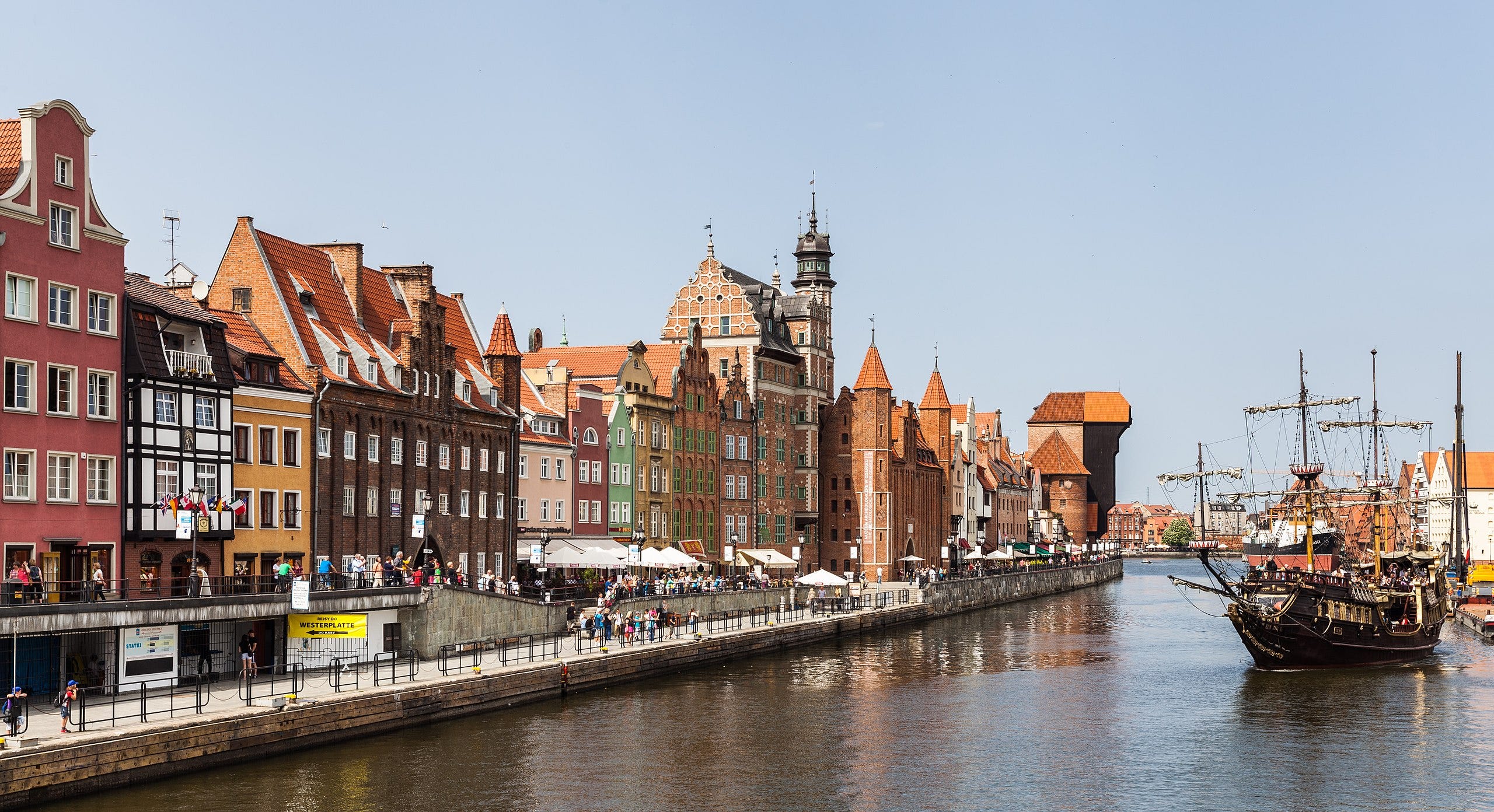
Enter Gdańsk, the jewel of Baltic commerce. This was the city that led the Prussian Confederation in their accession to Poland in 1454. Strategically positioned at the mouth of the Vistula River, Gdańsk controlled the vital trade route between the Polish heartlands and the Baltic Sea. Through its port flowed the grain, timber, and raw materials that fed Western European markets, making it one of the wealthiest cities in Northern Europe. With a population of 15,000 to 20,000 inhabitants, Gdańsk was a substantial urban center by 15th-century standards, its coffers swollen with the profits of international commerce.
The city's contributions to Casimir's war effort went far beyond mere loans and subsidies. Gdańsk transformed its merchant fleet into a naval force, issuing privateering licenses to harass Teutonic shipping and enforce a blockade of the Order's ports. This maritime campaign proved devastatingly effective, cutting off vital supplies to the Knights' strongholds and helping to turn the tide of the war.
Such indispensable support gave Gdańsk enormous leverage, which its shrewd burgher leaders exploited masterfully. In negotiations with the cash-strapped king, they secured a package of privileges that transformed their city into something unprecedented in the Polish realm: a virtually autonomous city-republic. The Great Privilege granted on May 15, 1457, abolished royal customs duties, granted the city duty-free trade throughout Poland, and even allowed Gdańsk to mint its own coinage — though bearing the king's image as a nod to his nominal sovereignty.
The arrangement suited both parties perfectly. Casimir retained Gdańsk as a loyal subject responsible for contributing to the realm's defense, while the city gained the freedom to govern itself without royal interference. In all but name, Gdańsk had become a free city within Poland — a status that would fuel its rise to even greater prosperity in the centuries to come.
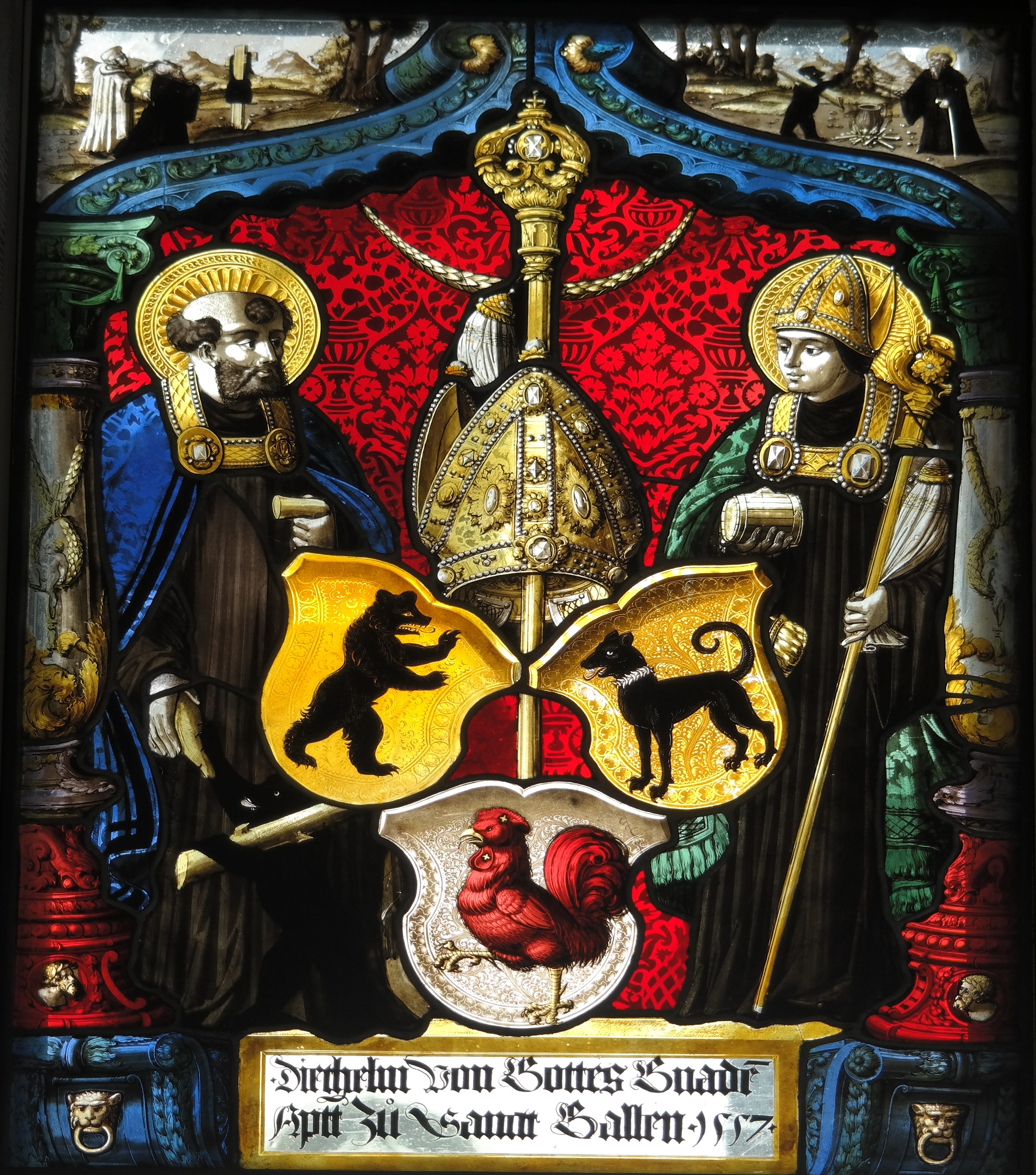
Meanwhile, far to the south between the Alpine foothills and Lake Constance, another city was completing its own purchase of freedom. Just one day before Gdańsk received its Great Privilege, on May 14, the city of St. Gallen handed over a substantial sum to secure its independence. Though the transaction was similarly mercantile — freedom bought with hard coin — the path that led St. Gallen to this moment was markedly different from Gdańsk's wartime bargaining.
St. Gallen traced its origins to the Irish monk Gallus, who established his hermitage by the Steinach river in the early 7th century. Around 719, the Abbey of St. Gall was founded on this site, eventually becoming one of Europe's most prestigious monasteries. In 1207, the Abbot was elevated to the rank of Imperial Prince (Reichsfürst), transforming the monastery into an ecclesiastical principality within the Holy Roman Empire.
The Abbey's success attracted a settlement that grew to serve pilgrims and monks, gradually evolving into a prosperous city. By the mid-15th century, St. Gallen had emerged as the undisputed "linen city" of the region, its high-quality textiles commanding premium prices from Iberia to Poland. This textile wealth fostered a confident merchant class who increasingly resented their subservient status under the Prince-Abbot's rule. The tension between the ecclesiastical principality and the mercantile city had become untenable.
Both parties recognized the advantages of aligning with the rising Swiss Confederacy — a military alliance that offered defense against external threats and access to valuable trade networks. In 1451, the Prince-Abbey secured an alliance with four Swiss cantons — Zürich, Lucerne, Schwyz, and Glarus — becoming a Zugewandter Ort (Associate Member). The city countered in 1454 by forging its own alliance with six cantons, including the powerful Bern, which would prove crucial in the negotiations to come.
On May 14, 1457, with Bern serving as mediator, the city of St. Gallen finally purchased its complete freedom from Abbot Kaspar von Breitenlandenberg for 7,000 gulden — roughly £1,000 sterling. This sum bought the abolition of all feudal obligations: citizens no longer had to swear allegiance to the Abbot, the city gained the right to appoint its own officials and judges, and secured the privilege to mint its own coinage. Most importantly, St. Gallen achieved the coveted status of Free Imperial City (Reichsstadt), answering directly to the Emperor rather than any local lord. Two sovereign states — one ecclesiastical, one republican — would henceforth coexist uneasily within the same urban space, a peculiar arrangement that would endure for centuries.
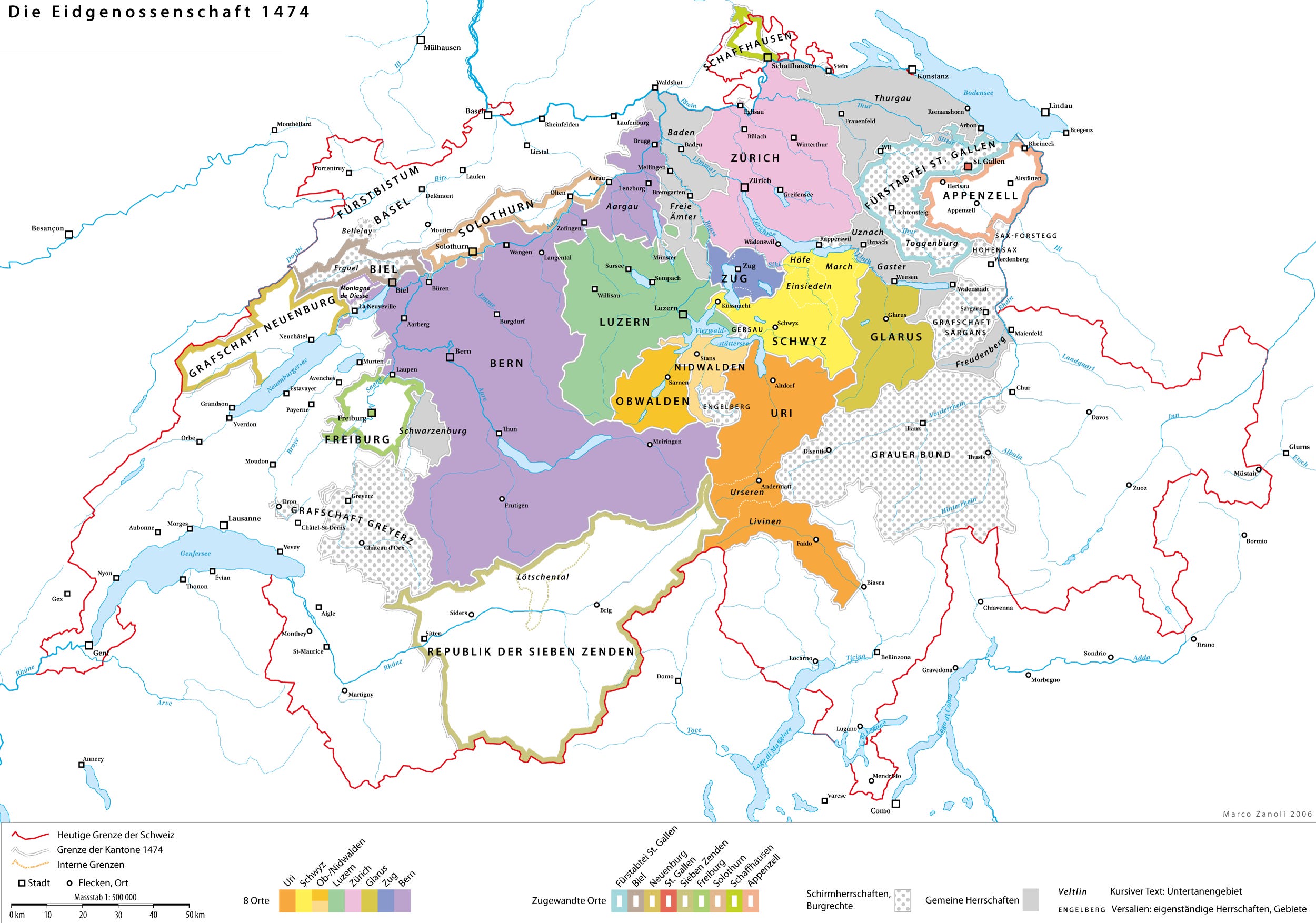
But what exactly was this Swiss Confederacy that St. Gallen had joined as an associate member? By 1457, the Eidgenossenschaft — literally "oath fellowship" — had evolved far beyond its origins as a defensive pact among three forest cantons around Lake Lucerne. From the original alliance of Uri, Schwyz, and Unterwalden in the late 13th century, the Confederacy had expanded to encompass eight full members: the founding rural cantons plus the cities of Lucerne, Zürich, Glarus, Zug, and Bern. This expansion accelerated dramatically after the Confederate victory over the Habsburgs at Sempach in 1386, as both rural valleys and prosperous cities sought the military protection and economic advantages of membership.
The Confederacy's constituents jealously guarded their autonomy, creating a patchwork of governance systems that blended democratic ideals with oligarchic realities. The cities operated under the Zunftverfassung — guild constitutions where craft guilds elected their representatives to sit on city councils. In Zürich, the guilds chose members for both the Small Council, which functioned as the executive, and the Great Council of Two Hundred. Yet despite this formally democratic structure, wealthy merchant families increasingly dominated these bodies, strategically placing relatives across different guilds to maximize their influence.
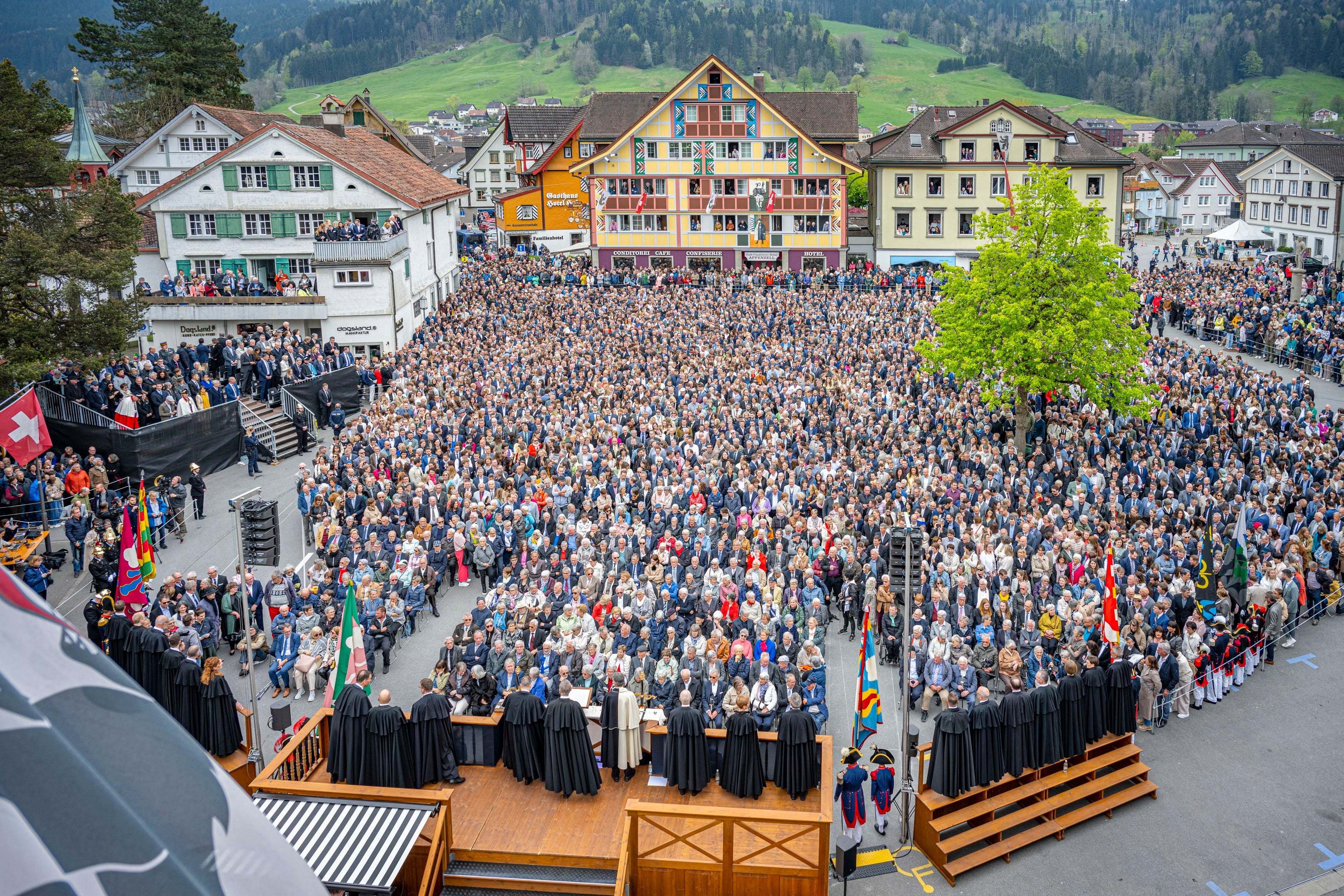
The rural cantons, by contrast, preserved the ancient tradition of the Landsgemeinde — the assembly of all male citizens gathering in the open air to elect their Landammann (chief magistrate) and decide important matters by show of hands. While this direct democracy appeared more egalitarian than urban guild politics, established families often controlled the proceedings through their local networks and economic clout.
Binding these diverse polities together was the Tagsatzung, a federal diet where delegates from each canton met to coordinate foreign policy and manage jointly-ruled territories. Yet this body remained deliberately weak, possessing no permanent seat, no treasury, and requiring unanimity for all major decisions — a structure that reflected the cantons' determination to preserve their sovereignty even at the cost of federal paralysis.
Unlike their neighbors, the Swiss lands had largely expelled or absorbed their traditional nobility. The Confederacy's military victories had broken the power of local aristocratic families, creating a unique social landscape within the Holy Roman Empire. Though nominally subject to the Emperor and regularly assessed for imperial taxes they rarely paid, the Swiss operated with increasing independence, their formidable military reputation serving as both shield and currency.
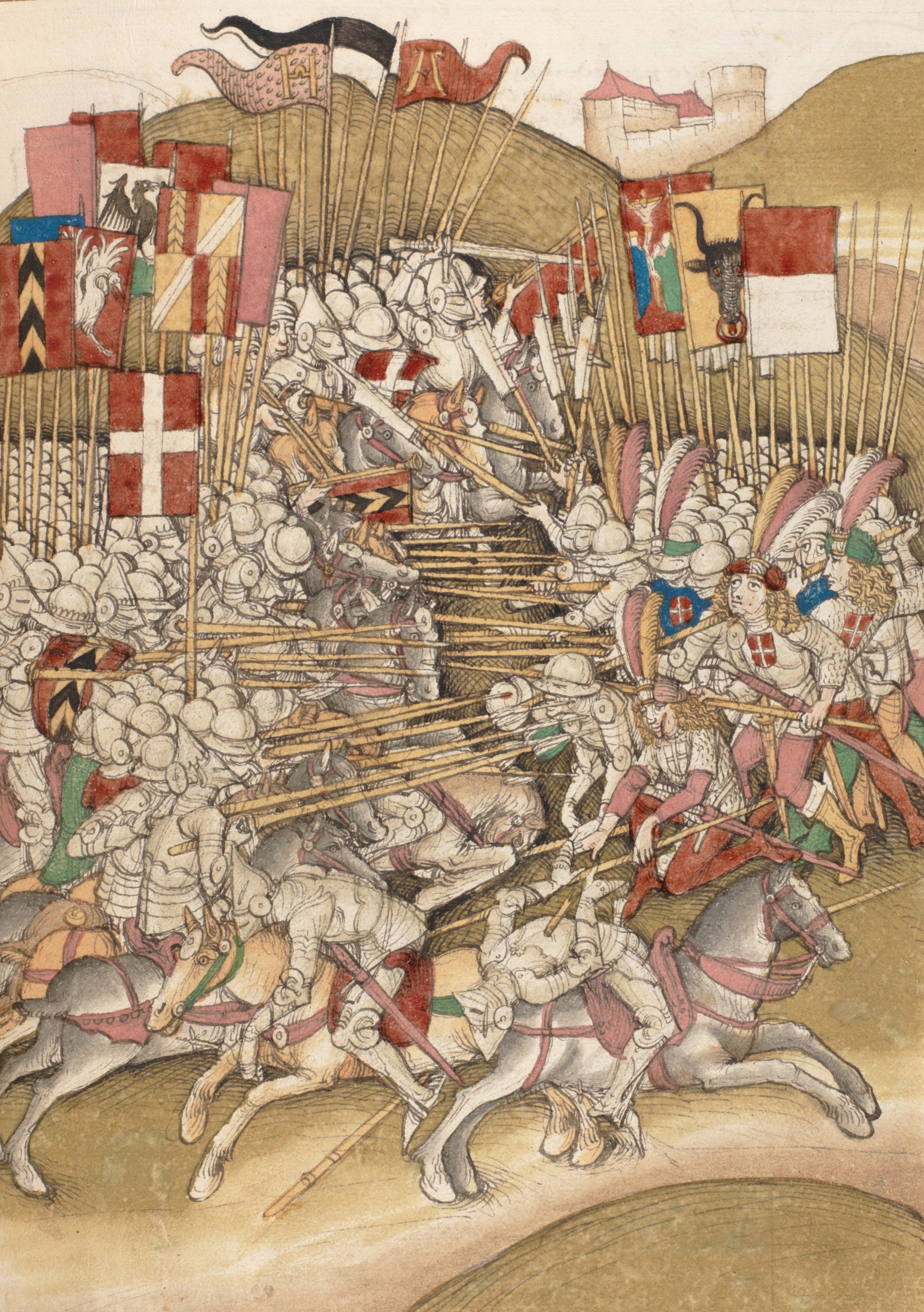
That reputation rested on revolutionary infantry tactics and legendary ferocity. At St. Jakob an der Birs in 1444, a Confederate vanguard of roughly 1,600 men fought to the death against a French army of some 30,000, inflicting casualties several times their own number before being completely annihilated. This sacrifice, witnessed by delegates attending the Council of Basel, spread the Swiss military legend across Europe.
The Confederate economy rested on three pillars. Agriculture remained primary, with grain cultivation in the fertile valleys of the Mittelland and extensive cattle herding in the Alpine regions, where hard cheeses suitable for long-distance trade were already becoming a specialty export. Military service formed the second pillar — young men from the mountain valleys, where arable land was scarce, found lucrative employment in foreign armies, sending home remittances that often exceeded what they could earn from farming. Foreign powers, particularly France, were beginning to pay regular subsidies known as Pensionen to secure preferential access to Swiss soldiers, money that flowed both to individual military entrepreneurs and increasingly to cantonal treasuries. The third pillar was craft production in the cities, exemplified by St. Gallen's linen industry, which had made it wealthy enough to purchase its freedom.
This economic diversity, combined with their fearsome military reputation and deeply rooted traditions of self-governance, enabled the Swiss to maintain their independence in a world dominated by feudal monarchies and princely states.