
1453 - Setting the Stage

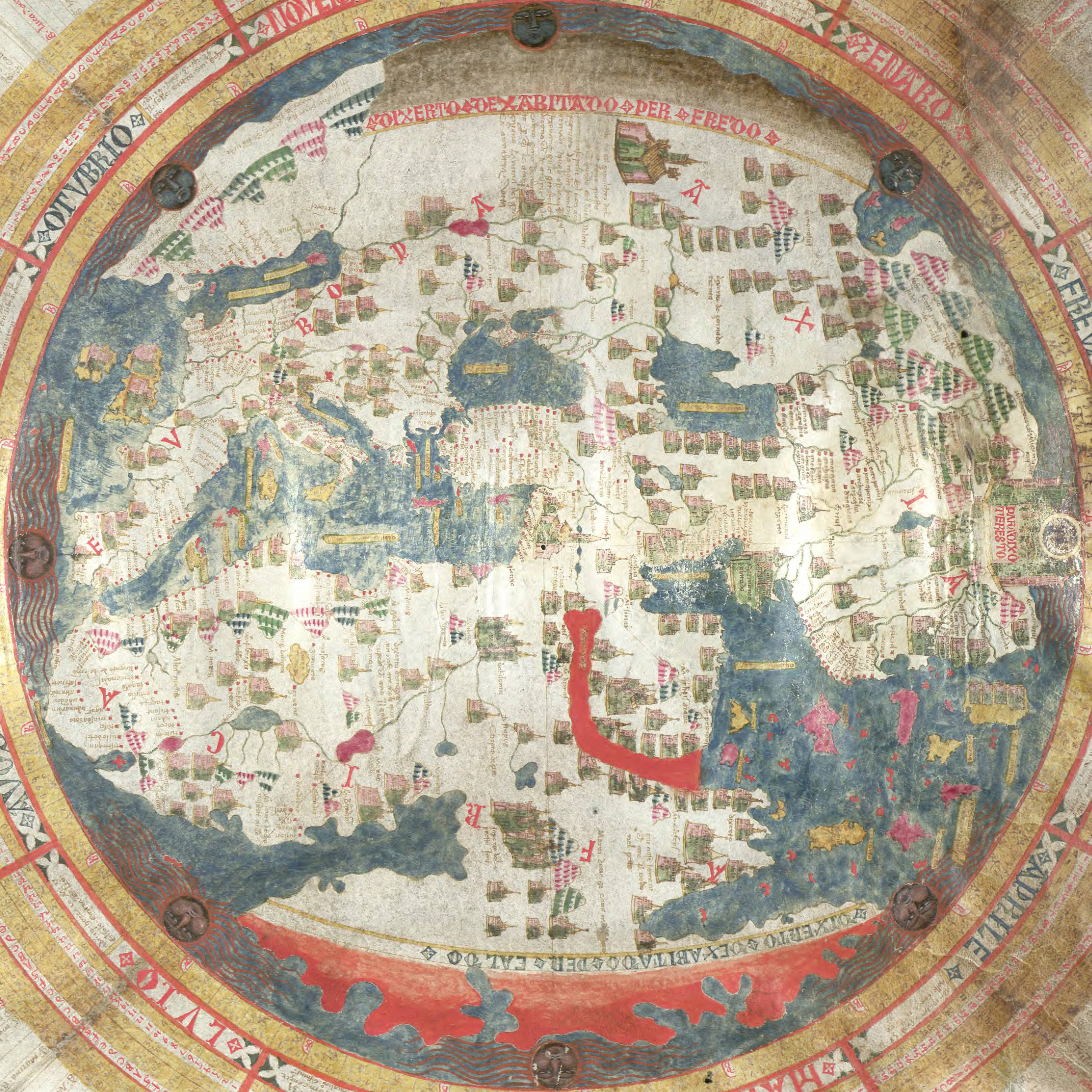
If you look up “Middle Ages” in an encyclopedia, it will probably tell you that this period in human history starts with the fall of Western Roman Empire in 476 and ends in 1453 or, depending on the definition, in some other year in the late 15th century.
Suppose we traveled to January 1st 1453 and asked a random person, whether they realize that they live at the end of a whole era in human history? Maybe they would call you crazy, or maybe they would admit that the winds are changing and the world could transform in their lifetimes. One thing they wouldn’t expect is that the pace of changes will never again slow down.
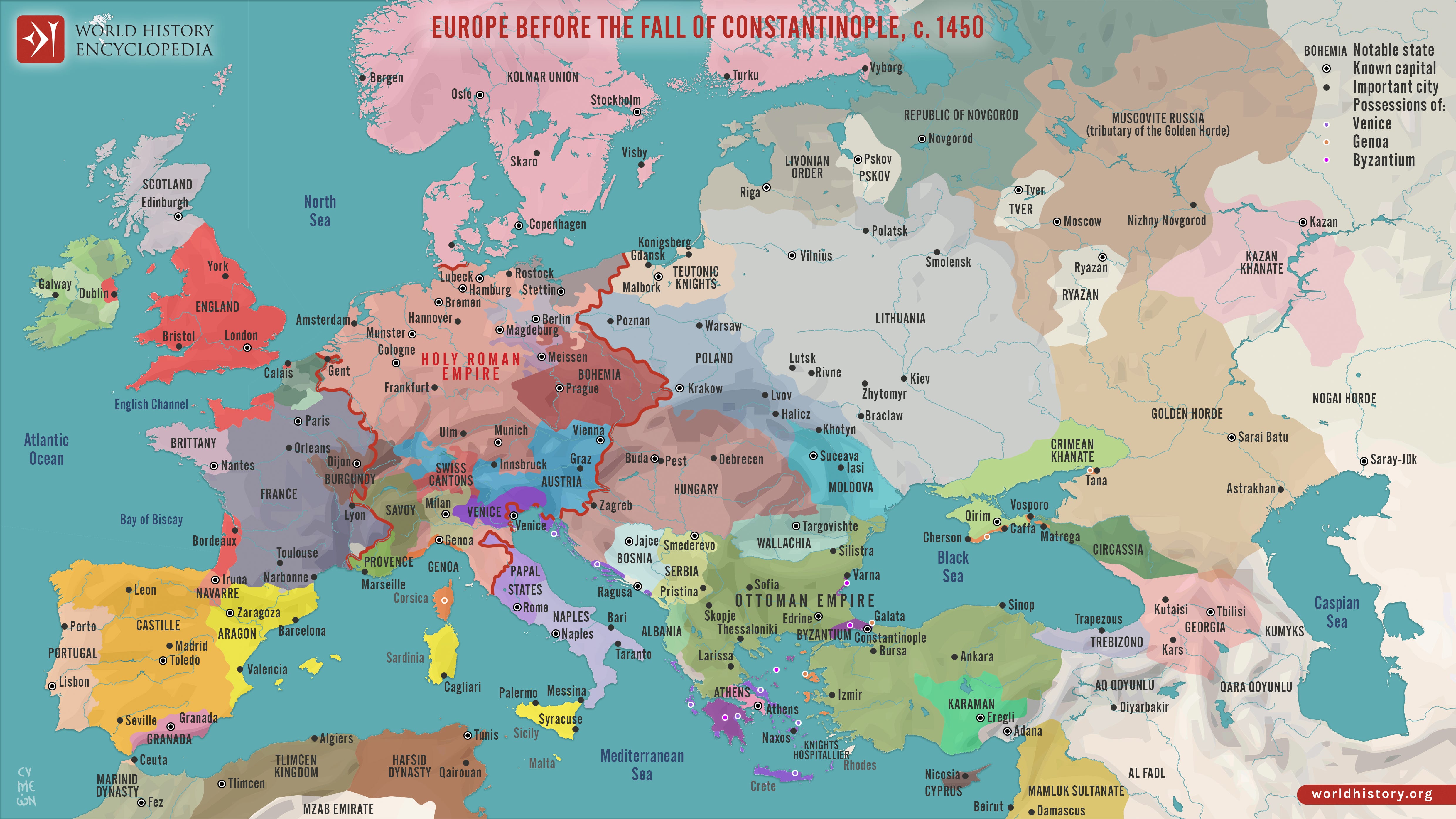
The year 1453 dawned upon a world consumed by deep shifts in power, long-standing conflicts, and the expectation of a new order. In the Eastern Mediterranean, the once-mighty Byzantine Empire, which its citizens called simply “Roman Empire”, found itself a shadow of its former glory. Its capital Constantinople was ever more tightly surrounded by the expanding Ottoman Empire under the ambitious young Sultan Mehmed II.
To the west, France and England were engaged in the seemingly interminable Hundred Years’ War. In the preceding decades, the tide had turned decisively in France’s favor and it was able to recapture all of its territory except for the parts of Gascony and the port of Calais.
The Italian peninsula remained a vibrant but volatile mosaic of rival city-states, wealthy republics, and papal territories, deeply entangled in complex diplomacy and frequent warfare.
In Muscovite Russia the ongoing struggle for power was at an end, won by the Grand Prince Vasily II, who just a few years earlier was a prisoner of his opponent Dmitry Shemyaka.
Across Europe, monarchies were struggling with the challenges of consolidating their power, while in distant East Asia, the vast Ming Dynasty of China faced its own internal and external problems, having to deal with the pressure from the Oirat (modern Kalmyk) people and their leader Esen Taishi.
The Indian subcontinent was a tapestry of powerful sultanates and Hindu kingdoms competing for regional dominance, while Africa presented a diverse array of established empires, rising powers, and bustling trade networks.
Across the ocean, the Aztec Empire under Motecuzoma I was continuing its expansion over the modern-day Mexico, while suffering from a major drought that started in 1450.
The methods of war on the European continent were in flux. While traditional arms and armor remained common, the growing proficiency in the use of gunpowder and artillery was beginning to demonstrate its terrifying potential. These new weapons were poised to play decisive roles in the year’s most significant military confrontations, capable of reducing medieval fortifications that had stood for centuries.
Europe, Asia and Africa maintained trade connections through established routes. The ancient Silk Road, for centuries the primary conduit for goods and ideas between East and West, faced an uncertain future, with some observers noting its traditional utility might be nearing an end due to Ottoman consolidation of power in the Near East. Maritime trade routes connected India to the East African Coast.
Portuguese, Castilian and Genoese sailors were busy perfecting their sailing ships and expanding their boundaries in an attempt to find new trading routes circumventing the Ottoman sphere of influence. The Canary Islands, discovered a century earlier were in the process of being conquered by the Castilian kingdom.
People living at that time thought of their time as “Modern”. Little did they know that centuries later historians would decide that “Modern” started only this year.